Author: Harry Flower

  • Why I Bought 100 ISBNs for Pararift Press

    ISBNs aren’t the most exciting part of publishing a book, but they are an important part of building an independent publishing business. Here’s why I decided to invest in 100 of them, why free ISBNs have limitations, and how this decision fits into my plans for Pararift Press.

    When you decide to publish a book, you quickly discover that writing the manuscript is only part of the process. You also have to think about editing, formatting, cover design, distribution, marketing, and a surprising number of administrative details.

    One of those details is the ISBN.

    An ISBN might seem like a small thing, but it can influence how your book is identified in the publishing industry and who appears as its publisher of record.

    When I established Pararift Press, I decided to purchase my own ISBNs rather than rely on the free numbers offered by publishing platforms. In fact, I went a step further: I purchased a block of 100 ISBNs from Bowker, the official U.S. ISBN agency.

    That might sound like overkill for an independent author who is just getting started. But I had my reasons, and they have as much to do with the future of Pararift Press as they do with the books I’m publishing today.

    What Is an ISBN?

    ISBN stands for International Standard Book Number. It is a unique identifier assigned to a particular book edition and format.

    Think of it as a product identification number for books. Retailers, distributors, libraries, and other organizations use ISBNs to identify publications and manage information about them.

    An ISBN helps distinguish one book from another, but it also distinguishes different versions of the same book.

    For example, suppose I publish a novel called Other People’s Atoms. I might eventually offer it in several formats:

    • Paperback
    • Ebook
    • Audiobook

    Each format may require its own ISBN, depending on the format and how it is distributed. A substantially revised edition may also need a new ISBN.

    This means that publishing one novel can consume several ISBNs. If I write ten books and release them in multiple formats, the numbers can add up quickly.

    An ISBN is not the same thing as a barcode. The ISBN is the number itself; the barcode is a graphic representation that can be scanned by retail systems. Printed books sold through conventional retail channels generally need a barcode on the back cover.

    ISBNs also do not establish copyright ownership. Copyright and ISBNs serve different purposes: copyright concerns legal rights in a creative work, while an ISBN identifies a particular publication.

    For a more detailed explanation, the official U.S. ISBN resource is available through ISBN.org.

    A Brief History of ISBNs

    The ISBN system emerged during a period when the publishing industry was looking for better ways to organize books and manage inventory.

    In 1967, British statistician Gordon Foster developed a numbering system for books at the request of the British bookseller W. H. Smith. His work built on an earlier nine-digit Standard Book Numbering system.

    The idea was adopted internationally in 1970, when the International Organization for Standardization formalized the system as ISO 2108.

    Originally, ISBNs contained ten digits. In 2007, the industry transitioned to the thirteen-digit format used today, making ISBNs compatible with the broader product-identification systems used in retail.

    The system works because each number identifies a particular publication within a worldwide framework. This allows books to be ordered, cataloged, distributed, and tracked across different businesses and countries.

    Today, ISBNs are an established part of the book supply chain.

    Why Do I Have to Buy ISBNs From Bowker?

    In the United States, Bowker is the official agency authorized to issue ISBNs to publishers and self-publishers located in the country and its eligible territories.

    Its ISBN purchasing website is MyIdentifiers.com.

    Other countries have their own ISBN agencies. Some provide ISBNs without charging publishers, while the United States operates a paid system through Bowker.

    For an independent author in the United States, that means budgeting for ISBNs is part of the cost of publishing independently.

    I find the pricing structure particularly interesting. You can purchase a single ISBN, but the price drops dramatically when you buy a larger block.

    According to Bowker’s published prices, the options are:

    Number of ISBNsTotal CostCost per ISBN
    1$125$125.00
    10$295$29.50
    100$575$5.75
    1,000$1,500$1.50

    Prices shown are Bowker’s published U.S. prices and may change. See the official pricing page for current rates.

    Look at the difference between buying one ISBN and buying 100.

    A single ISBN costs $125. A block of 100 costs $575, bringing the price down to $5.75 each.

    That is quite a difference.

    The problem is that you cannot simply buy one ISBN and use it for every version of your book. If you publish a paperback and a hardcover edition, you generally need separate ISBNs. Depending on your distribution arrangements, you may also need identifiers for other formats.

    For an author planning to publish several books, purchasing ISBNs individually can become an expensive way to operate.

    Why Not Just Use Free ISBNs?

    This is a reasonable question, especially for someone publishing their first book.

    Platforms such as Amazon Kindle Direct Publishing offer free ISBNs for eligible paperback and hardcover books. Other publishing services may have their own arrangements.

    If you’re publishing a single book and have no plans to distribute it outside the platform offering the free ISBN, using that option can make sense.

    It reduces your initial costs, and there is nothing inherently wrong with choosing it.

    However, free ISBNs come with limitations that are worth understanding before making a decision.

    1. You Have Less Control Over Your Publisher Identity

    When I buy an ISBN through Bowker and register it under Pararift Press, I can identify Pararift Press as the publisher of record for that edition.

    That matters to me because I’m not simply trying to upload a manuscript and sell a few copies. I’m building a publishing business.

    I want Pararift Press to be an identifiable publisher, not just a name on a website.

    When you use a platform-provided ISBN, the platform or its designated imprint is generally identified as the publisher of record for that edition. The exact arrangement depends on the service.

    This does not mean the platform automatically owns your manuscript or its copyright. Those are separate questions.

    Nevertheless, I prefer to have my own publishing identity associated with the books I produce.

    2. Free ISBNs Can Limit Your Distribution Options

    Amazon KDP’s free ISBNs are intended for books published through KDP. You cannot take a free KDP ISBN and use it to publish the same edition through another publishing service.

    If you later want to distribute a print edition through another service, you may need to obtain a different ISBN for that edition.

    Using your own ISBN gives you more flexibility. You can use the same ISBN for the same edition across compatible publishing and distribution services, provided you follow their requirements and register the book details correctly.

    This is important if you eventually want to expand beyond a single online retailer.

    3. Bookstores and Libraries May Require More Planning

    One reason I chose to buy my own ISBNs is that I want to keep my options open.

    I don’t want to assume that publishing a book on Amazon is the end of the process. I may want to explore other retailers, wider distribution, bookstores, or libraries.

    Having your own ISBN does not guarantee that a bookstore will stock your book or that a library will acquire it. Distribution arrangements, availability, pricing, demand, and the quality of your book’s catalog information all matter.

    However, owning your ISBN gives you more control over your publisher identity and makes it easier to plan for distribution through multiple channels.

    For me, that flexibility is worth considering from the beginning rather than trying to change course later.

    Why I Bought 100 ISBNs

    So why did I buy 100 instead of ten?

    The first reason is simple: I intend to publish more than one book.

    I’ve spent years writing, and I have several projects that I want to complete. Other People’s Atoms is one of my current publishing projects, and I have another novel, Pulga, that I want to finish.

    I don’t want every new book to become a separate exercise in figuring out the administrative details of publishing. I want to establish a system that supports the work I plan to do.

    The second reason is the price.

    At $575, a block of 100 ISBNs costs less than five individual ISBNs. At the bulk price, I can assign numbers to multiple books and formats without worrying about the cost of each additional identifier.

    The numbers do not expire. I can purchase them now and assign them to eligible publications as I prepare them for release.

    That makes the purchase a long-term investment in my publishing business rather than an expense I have to repeat with every new book.

    Of course, buying 100 ISBNs only makes financial sense if I expect to use enough of them and can comfortably afford the upfront cost. It would not be the right decision for every author.

    In my case, I had the money available, I expect to publish multiple books, and I wanted to establish Pararift Press for the long term.

    So I decided to make the investment.

    Why Pararift Press Matters to Me

    There is another reason I wanted my own ISBNs: I am building a business, not just publishing a book.

    Pararift Press is the publishing company I established to support my writing and publishing activities. I want it to have a recognizable identity and a foundation that can support future projects.

    When I register books using ISBNs associated with Pararift Press, I am establishing that identity within the publishing industry.

    That may not seem especially important when you’re publishing your first novel, but I think it is worth considering the bigger picture.

    A publishing business can develop over time. Today, I may be focused on getting my own books published. Tomorrow, I might want to explore additional services, new formats, or opportunities to work with other writers.

    I would rather build the foundation now than have to rethink everything when the business grows.

    There is an important distinction here: purchasing a block of ISBNs does not give me unrestricted permission to transfer those numbers to other publishers. Bowker’s rules require ISBNs to be assigned to publications for which the publisher holds the publishing rights.

    However, Pararift Press could potentially become the publisher of record for books written by other authors if I establish the appropriate publishing arrangements and hold the necessary publishing rights.

    That is something I may consider in the future.

    For now, my priority is to publish my own work and learn how to operate an independent publishing business.

    But I like knowing that I am building something that could grow beyond my first few books.

    How to Buy Your Own ISBNs

    If you’re considering buying ISBNs in the United States, the official purchasing website is MyIdentifiers.com.

    You’ll need to create an account and provide your contact and billing information. You’ll also need to establish the publisher or imprint name you want associated with your ISBNs.

    For me, that name is Pararift Press.

    Before purchasing, think about how many books you expect to publish and which formats you plan to offer.

    A few questions can help you make the decision:

    • Do you expect to publish only one book, or several?
    • Will you offer paperback and hardcover editions?
    • Do you plan to distribute your books through multiple publishing services?
    • Do you want your own publishing imprint associated with your books?
    • Can you comfortably afford the upfront cost of a larger block?

    If you’re publishing a single book and want to keep expenses down, a free ISBN may be perfectly adequate for your needs.

    If you intend to publish several books and build a recognizable publishing identity, buying your own ISBNs may be a better fit.

    You should also remember that purchasing ISBNs is only one part of publishing. You still need to register accurate information for each publication, prepare the book files, and meet the requirements of whichever services you use.

    Final Thoughts: Investing in the Future

    Buying 100 ISBNs was not a decision I made because I needed 100 numbers immediately.

    I made it because I wanted to establish Pararift Press as an independent publisher and give myself room to grow.

    The price difference between buying one ISBN and buying 100 is substantial. Since the numbers do not expire, I can use them as my publishing projects develop.

    More importantly, buying my own ISBNs gives me control over the publisher identity associated with my books and more flexibility when considering distribution options.

    I recognize that other authors may make a different decision. There is nothing wrong with using a free ISBN when it meets your needs. Publishing independently involves many expenses, and keeping initial costs down can be a sensible strategy.

    But for me, Pararift Press is a long-term project.

    I want to write more books, publish them under my own imprint, and explore what this business might become. Eventually, I may even consider publishing work by other authors.

    Buying 100 ISBNs was one step toward making that possible.

    Now I need to do the most important part: finish writing, publish the books, and get them into the hands of readers.


  • Why I Formed an LLC for My Publishing Company

    Is an LLC really necessary for an independent author? Here’s why I decided to establish one for Pararift Press, what it cost, and how I got my publishing business started.

    When I decided to build Pararift Press into a publishing business, one of the first questions I faced was whether I should form a limited liability company, or LLC.

    As an independent author, I could have started out as a sole proprietor without creating a separate legal entity. That would have been simpler and less expensive. But I wanted to approach publishing as a business, not just a hobby. I also wanted to establish a foundation that could grow as I published more books and developed other projects.

    After researching my options, I decided that forming an LLC was the right choice for me.

    Why Form an LLC?

    There are several potential advantages to creating an LLC for a small publishing business.

    Personal liability protection. One of the main attractions of an LLC is that it can help separate the owner’s personal assets from the company’s debts and certain legal claims. Publishing involves more than writing books. It can include contracts, vendors, sales, and other business relationships. An LLC can provide an additional layer of protection, although it does not prevent lawsuits or protect against every possible claim.

    A more professional business. Establishing Pararift Press as a formal business gave me a structure and identity beyond simply publishing books under a name. It also provides a business entity I can use when dealing with service providers and other organizations.

    Separate business finances. I wanted to keep the money coming into the business separate from my personal finances. Having a dedicated business bank account makes it easier to track book income, publishing expenses, website costs, and other transactions.

    A better accounting structure. An LLC encourages you to maintain organized records and think about the financial performance of your business. I want to understand what I spend, what I earn, and whether Pararift Press is moving toward becoming a sustainable publishing operation.

    Privacy. Using a registered agent can help reduce the need to use your home address for certain official business purposes. This was another consideration when choosing a formation service.

    A foundation for future growth. My immediate goal is to publish my own fiction, but I want Pararift Press to be more than a single book. I am also developing a website and other ways to reach readers. An LLC gives me a formal structure that can accommodate a broader publishing business over time.

    Clearer business records and ownership. Establishing a company makes it easier to document business activities and identify which assets, agreements, and expenses belong to the business.

    These benefits don’t automatically translate into tax savings. A single-member LLC is generally treated as a disregarded entity for federal income tax purposes unless it elects another classification. The real advantages for me were the business structure, financial separation, and potential liability protection.

    Why I Chose Northwest Registered Agent

    Once I decided to form an LLC, I had another choice to make: file the paperwork myself with the State of Texas or use a business formation service.

    Texas has a reputation for being business-friendly, and forming an LLC is relatively straightforward. I could have handled the filing myself. However, I decided to use a formation service, not because I thought the paperwork would be too difficult, but because I wanted a registered agent and a business address, along with the convenience of having someone else handle certain official notices.

    I compared several companies and spent time researching their offerings. Northwest Registered Agent stood out because it appeared to be an established provider, and I found plenty of positive reviews on YouTube. Its relatively low upfront service fee was another attraction.

    I also liked the idea of having a registered agent with an address in Austin, Texas. Rather than serving as my own registered agent, I could use a service that receives legal notices and other official documents in that capacity and notifies me as appropriate. This also helps me avoid using my home address for that particular purpose.

    For a small business owner who values privacy and convenience, that can be worthwhile.

    Northwest offers other services, including a domain name and website hosting. However, I didn’t need those services because I had already arranged my domain and hosting independently.

    What Did It Cost?

    I signed up with Northwest on August 27, 2026. The State of Texas finalized the formation of Pararift Press LLC on August 31, just four calendar days later.

    My total bill was $339:

    • $300 for the Texas state filing fee.
    • $39 for Northwest’s formation service.

    That was a manageable upfront cost for establishing the business.

    There is an ongoing expense to consider, too. The registered agent service renews after the first year, so it’s important to understand the renewal price rather than focusing only on the initial formation fee. Prices can change, and optional services may cost extra, so check the current terms before signing up.

    Getting an EIN From the IRS

    After establishing the LLC, I needed an Employer Identification Number, commonly called an EIN.

    An EIN is a federal tax identification number for a business. It is useful for identifying the company in financial and administrative matters, including opening a business bank account.

    I found the process of obtaining the EIN relatively straightforward. The IRS offers an online application for eligible applicants, and applying directly through the IRS is free.

    An EIN isn’t required for every single-member LLC in every circumstance, but it is commonly useful when setting up business banking. In my case, it was an important step in getting Pararift Press ready to operate as a business.

    Opening a Business Bank Account With Bluevine

    Once I had the LLC and EIN, I used Bluevine to open a business bank account.

    Once again, there were several options to consider. Bluevine stood out as a popular choice that offered an account without a monthly fee under its applicable account terms. So far, I’ve had no major issues with the service.

    Getting the account set up wasn’t entirely effortless, however. I had to work through some security checks and figure out how to link a personal checking account to fund the new business account. The process took about a week and required a little patience.

    Opening the account was an important next step because I wanted to keep business transactions separate from personal spending. Publishing expenses can include ISBNs, book production, editing, website hosting, software, and marketing. Book royalties and other business income also need somewhere to go.

    Having a dedicated account makes it easier to track these transactions and maintain cleaner records. It also reinforces the distinction between the business and my personal finances.

    Of course, opening a separate bank account is only part of the process. You still need to keep good records and use the account appropriately.

    Is an LLC Necessary for Every Author?

    Not necessarily.

    Someone who is just beginning to write, has little business activity, and faces limited business risk may be comfortable operating as a sole proprietor. A sole proprietorship generally requires less setup and administration.

    An LLC, on the other hand, involves formation costs and ongoing responsibilities. You must understand the applicable state requirements, maintain appropriate records, and account for any registered agent fees or other recurring expenses.

    An LLC also isn’t a substitute for insurance, sound contracts, or good business practices. It doesn’t guarantee that you won’t be sued, and it doesn’t eliminate every form of personal liability.

    Every author’s circumstances are different. The decision depends on the nature of the business, its risks, its finances, and plans for the future.

    For me, the decision came down to how I wanted to approach Pararift Press. I wanted to build a real publishing business, establish a clear financial structure, and create a foundation for future work. The cost and administration seemed worthwhile.

    Building Pararift Press

    Forming the LLC was one of the early steps in turning Pararift Press into an operating business. It gave me a formal structure, helped me organize the financial side, and allowed me to move forward with business banking.

    There is no single correct way for every author to set up a publishing operation. But if you’re planning to publish multiple books, develop a business around your writing, or expand beyond a personal writing project, it’s worth investigating whether an LLC makes sense for you.

    For me, it was a practical step toward treating publishing as a business while continuing to focus on what matters most: writing books and finding readers.

  • How to Display an Email Address on Your Website Without Making It Easy for Bots to Harvest

    Background

    After setting up my custom domain email address (a process I wrote about in my post Setting Up Google Workspace for ParaRift: What I Learned the Hard Way), my next priority was giving site visitors a way to contact me.

    However, one of the main things I wanted to avoid was publishing my email address in plain text for every automated scraper on the web. My email is tied directly to my Google Workspace account, and leaving it out in the open makes it vulnerable to spam networks and marketing lists.

    I needed a way to make contacting me convenient for humans without handing my address to bots.


    The Core Dilemma: Exposed Emails vs. Harvesters

    Automated programs constantly scan public web pages searching for mailto links and text matching email patterns. While publishing an email address doesn’t guarantee you’ll be flooded with spam overnight, taking proactive measures to minimize exposure is a sensible defense.

    Before settling on a solution, I looked at a few common ways people handle this problem.


    Alternative Obfuscation Methods (And Their Drawbacks)

    There are several traditional approaches to keeping an email address off plain HTML pages, but most come with trade-offs:

    • Leaving the Email Off Entirely: Direct visitors to a contact form instead of displaying the email address.
    • JavaScript Assembly: Building the address dynamically in the browser (e.g., combining user and domain variables). While this stops simple scrapers, modern bots often execute JavaScript and can easily reconstruct the address.
    • HTML Character Entities: Replacing characters with entity codes (e.g., using @ for @). Most automated tools decode these instantly.
    • Displaying as an Image: Rendering the text inside an image file. This hurts user experience—it breaks copy-paste functionality and creates accessibility issues for screen readers.
    • WordPress Plugins: Obfuscation plugins use various encoding tricks, but efficacy depends heavily on the specific technique used.

    None of these methods are foolproof. Scrapers continue to evolve with optical character recognition (OCR) and full browser rendering engines.


    My Solution: A WordPress Contact Form

    Instead of obfuscating an email address on the page, the most reliable path was to route messages through a contact form. Visitors fill out their name, email, and message, and the site sends the delivery directly to my inbox without ever exposing my address in the source code.

    To build this, I used two plugins from WPManageNinja: Fluent Forms (to create the frontend interface) and FluentSMTP (to handle deliverability).


    How I Built It: Connecting FluentSMTP to Google Workspace

    Setting up the form interface was quick, but routing emails securely through Google Workspace required configuring an OAuth connection in Google Cloud.

    Note: I learned that with Google Workspace, a limited number of free Google Projects are available with the paid subscription I am on. Setting up the contact form takes one of these Google Projects.

    [WordPress / Fluent Forms]
               │
               ▼
         [FluentSMTP]
               │ (OAuth 2.0 / Gmail API)
               ▼
     [Google Cloud Console] ──► [Google Workspace Inbox]

    1. Initial Plugin Configuration

    In WordPress, I navigated to Settings → FluentSMTP and selected Gmail / Google Workspace as the provider. FluentSMTP generated an Authorized Redirect URI, which I copied for the Google Cloud setup.

    2. Google Cloud Project Setup

    I opened the Google Cloud Console and created a new project named WordPress SMTP Connector.

    Note: Because I was using a Google Workspace account, Google Cloud required selecting a parent organization during project creation rather than leaving it unattached.

    3. Enabling the Gmail API

    Inside the new project, I navigated to APIs & Services → Library, searched for the Gmail API, and enabled it.

    4. OAuth Consent Screen

    Under APIs & Services → OAuth consent screen:

    • Set User Type to Internal (since the application only routes messages within my Google Workspace account).
    • Provided the required app name, support email, and developer contact details.

    5. Generating Credentials

    Under APIs & Services → Credentials:

    • Clicked Create Credentials → OAuth client ID.
    • Set application type to Web application.
    • Pasted the Authorized Redirect URI provided by FluentSMTP.
    • Generated the Client ID and Client Secret.

    6. Authenticating & Testing

    I pasted the Client ID and Client Secret back into FluentSMTP, clicked Authenticate with Google, and logged into my Google Workspace account to grant access.

    Once authorized, I used FluentSMTP’s Email Test tool to send a test message. It delivered successfully.


    Form Setup & Final Considerations

    With the SMTP pipeline operational, I finalized the form in Fluent Forms, mapped the notification routing to my inbox, and embedded it on the site.

    When implementing a contact form setup, keep these factors in mind:

    1. Spam Protection: Forms can still be target practice for spambots. Honeypot fields or CAPTCHA tools help filter submission noise.
    2. Deliverability: Sending directly through Google Workspace via OAuth ensures strong deliverability compared to standard PHP mail().
    3. Privacy & Accessibility: Inform visitors how their submitted details are handled, and ensure the form is fully navigable via screen readers and keyboards.

    Final Thoughts

    The entire configuration took about two hours, with most of the time spent working through Google Cloud Console permissions and organizational settings.

    Using a contact form connected via FluentSMTP and Google Workspace gives visitors a reliable way to get in touch while keeping my email address off public pages.

  • A Late-Night H-E-B BBQ Run: St. Louis Ribs to Go

    After a late airport drop-off task at DFW airport on 9/24/2026, a whole rack of ribs made an easy dinner and tomorrow’s lunch.

    Location: True Texas BBQ at H-E-B Irving, 2351 W. Interstate 635, Irving, TX 75063
    Visit: About 8 p.m.
    Order: Whole rack of St. Louis-style pork ribs, about $40

    The front entrance to the Irving H-E-B Texas BBQ

    Coming back from the airport last night, I decided to bring home barbecue for a easy meal. I pulled into the H-E-B on Interstate 635 in Irving and headed for True Texas BBQ, the in-store barbecue counter.

    I got there around 8 p.m. The person at the counter told me they were out of most meats, including brisket, which is my favorite. Turns out it’s everyone’s favorite. Korean-style pork ribs were among the options still available. I went with a whole rack of St. Louis-style ribs, which came to about $40. I had these before. From my last trip to the location in George Town, TX, I understand this style of ribs will only be available for a limited time.

    The rack was generous: dinner for three, with several ribs left for lunch the next day. Overall, I’ve been pleased with the barbecue.

    Texas BBQ can get crazy—parking lots fill up fast, and prices can easily double. Luckily, H-E-B makes things simple. Their Korean-style ribs pack a little heat, and the spicy pickles serve as a flavorful side note. On this trip, I took home the St. Louis-style rack to share with my family.

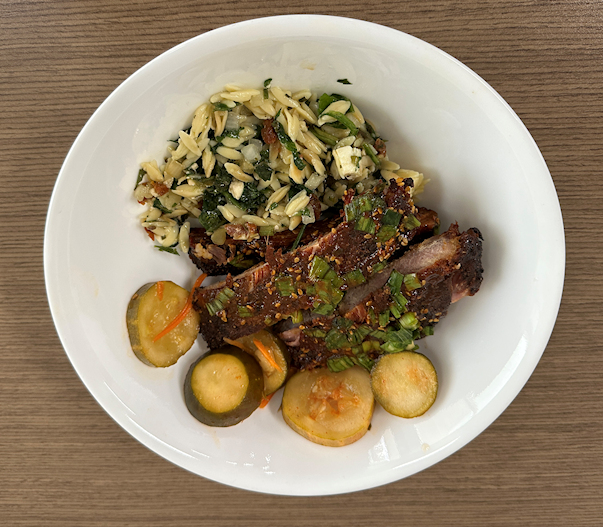
    One useful thing about this setup is the flexibility. You can order barbecue to eat there or take it to go, and you can pick up grocery-store sides to round out the meal. For lunch the next day, I reheated the leftover ribs and paired them with orzo pasta I’d bought at the store, along with the pickles.

    A white bowl containing three ribs, orzo salad, and spicy Korean Pickles.

    That made for an easy second meal and a good return on a rack that fed three people the night before. If you’re stopping late, it may be worth checking what’s still available—the selection can be limited near closing time.

    Visit details

    True Texas BBQ is inside the H-E-B at 2351 W. Interstate 635, Irving. The restaurant’s current location listing shows daily hours of 11 a.m.–9 p.m. Hours and menu availability can change, so check before making a special trip.

    Note: Many of the H-E-Bs in the metroplex have this option but not all.

    To get specific locations and menu items and pricing visit: https://www.truetxbbq.com/locations/

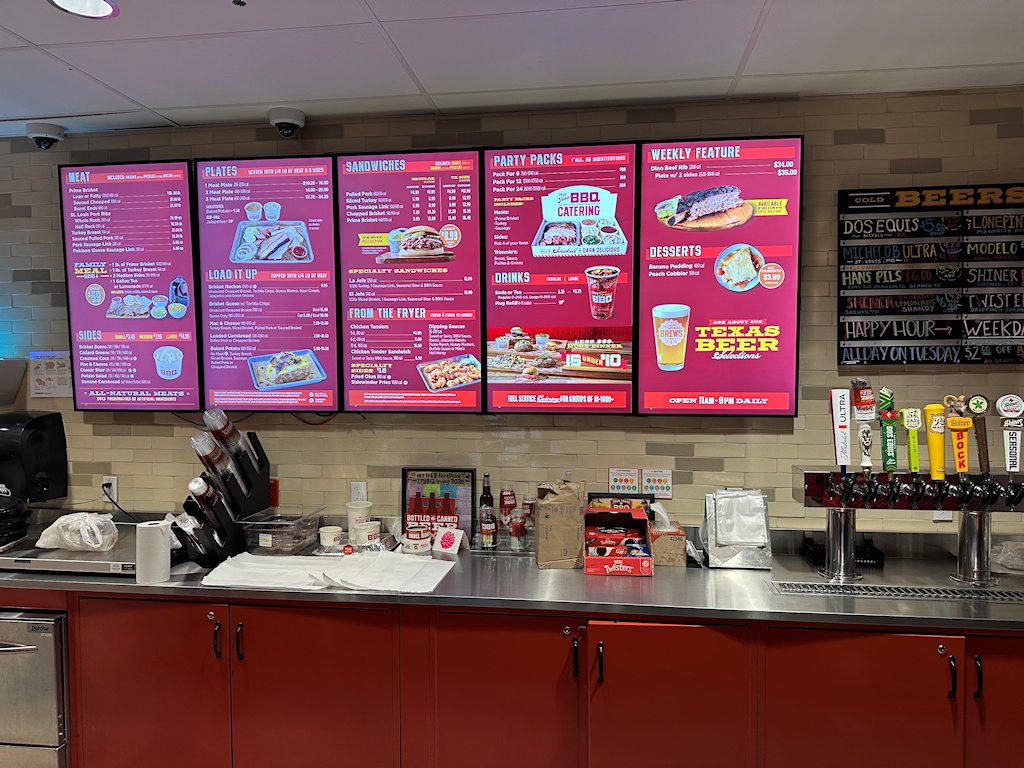
    Menu items available at the Irving H-E-B Texas BBQ  location
  • Setting Up Google Workspace for Pararift: What I Learned the Hard Way

    When I started building Pararift Press, one of the first practical needs was setting up a professional email address: My first name harry @pararift.com.

    It sounded simple. I assumed I would go to my website host, turn on email, and be done.

    Instead, I spent several hours learning about DNS records, Workspace users, billing, YouTube access, Google Drive, and the difference between synchronization and backup. None of it was impossible, but it was much more involved than I expected.

    Why I Did Not Use My Web Host for Email

    I decided to keep website hosting and email separate.

    Several negative issues can be avoided by separating email from the hosting account. Because of spam, blocklists, and hackers, having a third party do this job makes sense.

    After looking at several options, including Neo and Proton Mail, I narrowed it down to Microsoft 365 Business Basic and Google Workspace. The prices were similar, and both are well-established tools that come with many other features.

    I chose Google Workspace because I wanted Gmail, Google Drive, easy YouTube integration, and the broader Google ecosystem as Pararift grows.

    The $7 Question

    At the time I signed up, the Starter plan appeared to cost about $7 per month when paid yearly. That is what I saw.

    What I did not fully appreciate was the phrase “per license.”

    I am one person. I wanted one professional email account. But somewhere during setup, I ended up with two Workspace user accounts: one that became the administrator account and another that became my everyday account.

    I did not set out thinking, “I need two paid users.” But that was effectively the arrangement I created, and I did not realize at first that I was being charged for two licenses.

    This was one of the most confusing parts of the process. A one-person business can have one Workspace user who is also the administrator. You do not automatically need a separate paid administrator account.

    I eventually figured that out, but not before it cost me time and created a billing problem to untangle.

    DNS Was the First Challenge

    Setting up Google Workspace meant proving that I owned pararift.com and connecting the domain to Google’s email service.

    That required editing DNS records through my host, Nixihost. It took about two hours of reading instructions, entering records, waiting for verification, and checking that everything had worked.

    By the end, I had email working. I also had a much better understanding of the machinery behind a professional email address hosted by a large company.

    It was one of those tasks that seems invisible when it works. You send an email, receive an email, and never think about it again. But getting there required more setup than I expected.

    The YouTube Surprise

    One reason I chose Google Workspace was that I plan to build a YouTube channel around Pararift.

    After setting up my account, I logged into YouTube and saw a message I had not expected:

    This account is not yet eligible to use YouTube.

    That was a surprise. I had chosen Google partly because of YouTube, but the service I wanted was not immediately available.

    Google restricts some YouTube features for new Workspace accounts. According to Google, full access becomes available after the Workspace account has existed for 30 days or after Google has processed at least $30 in payments. Google also says that access can take up to 72 hours after a payment is processed.

    In my case, I chose to make a $50 payment rather than wait 30 days. YouTube became available the next day.

    The Trial Created Another Complication

    The trial period made the situation more confusing for me.

    I had originally started with the trial, then moved into a paid setup because YouTube mattered to my plans. At the same time, I was still dealing with the fact that I had accidentally created two paid Workspace users.

    Eventually, I needed to contact Google support to straighten it out.

    Google Support Actually Works

    I was pleasantly surprised by this.

    With a giant online company, getting a real person can sometimes feel nearly impossible. You can spend a long time clicking through help articles, automated assistants, forms, and menus without reaching someone who can actually look at your account.

    That was not my experience with Google Workspace.

    I had two support chats, and both helped me understand what had happened and how to fix it. I was able to get the account situation straightened out and return to the setup I wanted: one person, one account, one license.

    The setup was confusing, but there was eventually a real person available to help.

    Google Drive Was the Part I Really Liked

    Once I got past the account issues, I began setting up Google Drive for desktop.

    I have used Google for years but never enabled this.

    On my Windows computer, Google Drive appears in File Explorer as a network share “G”. That means I can work with my Pararift files using the same familiar file-management tools I already use every day.

    For a writer, that matters. My manuscripts, notes, research, cover files, and business documents can be available through Google Drive while still feeling like ordinary files on my computer.

    There are different ways to configure Drive, including streaming files or mirroring them locally. I choose to keep them both on the local drive and the cloud.

    My Backup Philosophy

    I do not trust a single copy of anything important.

    Writing represents hundreds of hours of work. A manuscript is not something I want to trust to one computer, one cloud service, or one accident-free day.

    My current plan is to keep:

    • A copy in Google Drive
    • A synchronized or local copy on my computer
    • Periodic backups to an external drive

    My writing is too important to trust to a single computer—or a single cloud service.

    What I Would Do Differently

    If I were starting again today, I would do a few things differently.

    Decide how many users I actually need

    For a one-person business, only one account is needed.

    Understand the YouTube timing before starting

    If YouTube is important to your plans, know that a new Workspace account may have limited access at first until payment is made.

    Budget several hours

    I expected this to be a quick task. Anything that is done for the first time can take longer.

    If I had to do it again, it would go much faster because I now understand what I am doing.

    Do not panic when the interface gets confusing

    The good news is that Workspace support exists. I used Gemini for help every step of the way and when that failed live support was there.

    Was Google Workspace the Right Choice?

    Yes,

    Now that the account is straightened out, I am happy with the direction. I have a professional Pararift email address, Google Drive, and access to the Google ecosystem. I am also building toward YouTube.

    More importantly, I understand the system much better than I did when I started.

    The Bigger Lesson

    This experience is a good example of what I am trying to do with Pararift.

    I am building a publishing company while also working to become a more productive fiction writer. That means making decisions about technology, publishing, websites, email, YouTube, AI, file storage, backups, and distribution.

    I am not writing a definitive guide to Google Workspace. I am documenting what happened when one person tried to set up a publishing company using it. If someone else avoids spending a few extra hours sorting out the same problems, then this article has done its job.

    That is how I went from “I just want a professional email address” to understanding a great deal more about Google Workspace than I expected. Next up is what I learned when creating a contact form on my website.

  • Today is Saturday 8/15/2026.

    A weekend has passed, and my new website, Pararift, is now live. Lots of work is still needed, but it’s no doubt the start of something new.